
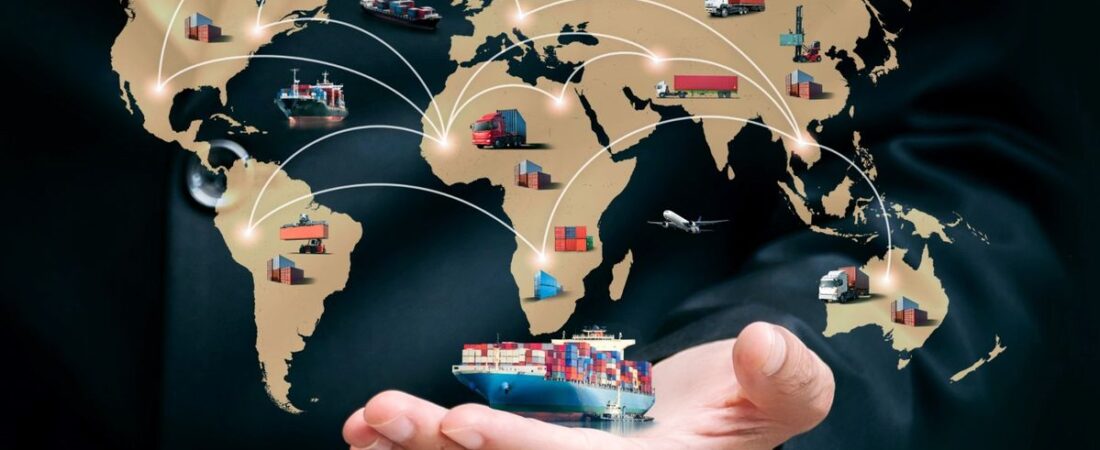
Global Import Export Business
The global trade industry is like the bloodstream of the world economy. Every day, in global import export millions of products cross borders from smartphones and furniture to clothing and machinery. But have you ever wondered how the import export business actually works behind the scenes?
It may look complicated at first, but once you break it down step by step, the process becomes much easier to understand. Whether you’re planning to start your own export business, work with a global sourcing company, or simply learn how international trade functions, this guide will walk you through everything.
Let’s dive in.
What Is the Global Import Export?
The import export business involves buying goods from one country and selling them in another. Imports bring products into a country, while exports send products out.
Think of it like a global marketplace without borders. A company in Pakistan can import from China, sell products in Dubai, and distribute them to the Saudi Arabia wholesale market all within a single supply chain.
This business connects manufacturers, distributors, wholesalers, retailers, and consumers around the world.
Why Import Export Is Growing Worldwide
Globalization has completely transformed trade. Today, businesses no longer rely only on local suppliers. Instead, they search worldwide for better quality, lower prices, and faster production.
Several factors are fueling this growth:
- Expansion of e-commerce
- Faster international shipping
- Digital payment systems
- Rising demand for imported products
- Easier communication with overseas suppliers
Even small businesses can now become international sellers with relatively low investment.
Understanding the Role of Import Export Services
Managing global trade alone can feel like juggling flaming torches. That’s where import export services come in.
These companies help businesses handle:
- Product sourcing
- Documentation
- Shipping coordination
- Customs clearance
- Warehousing
- Logistics solutions
Instead of struggling with regulations and paperwork, businesses outsource these tasks to experts.
It saves time, reduces risks, and improves efficiency.
Step 1 – Research the Market
Before importing or exporting anything, market research is critical.
You don’t want to import winter jackets into a tropical country or export low-demand products nobody wants.
Successful traders study:
- Customer demand
- Competitor pricing
- Import restrictions
- Product trends
- Profit margins
Good research minimizes costly mistakes.
Finding the Right Niche
A niche is your focused product category.
Examples include:
- Electronics
- Textiles
- Beauty products
- Construction materials
- Kitchenware
The smartest traders usually start with products they understand well.
Ask yourself:
- Is there steady demand?
- Can I source it affordably?
- Is shipping manageable?
- Will the profit margin justify the effort?
Choosing the right niche is like planting seeds in fertile soil. The stronger the foundation, the better the growth.
Analyzing International Trends
Global demand changes constantly.
For example:
- Eco-friendly products are booming
- Smart gadgets are growing rapidly
- Sustainable packaging is becoming mandatory in many countries
Tools like Google Trends, Alibaba insights, and trade reports help identify opportunities.
The winners in global trade are usually those who spot trends early.
Step 2 – Find Reliable Suppliers
Finding trustworthy suppliers is one of the most important parts of the import export business.
A bad supplier can destroy your reputation overnight.
That’s why businesses carefully evaluate manufacturers before placing orders.
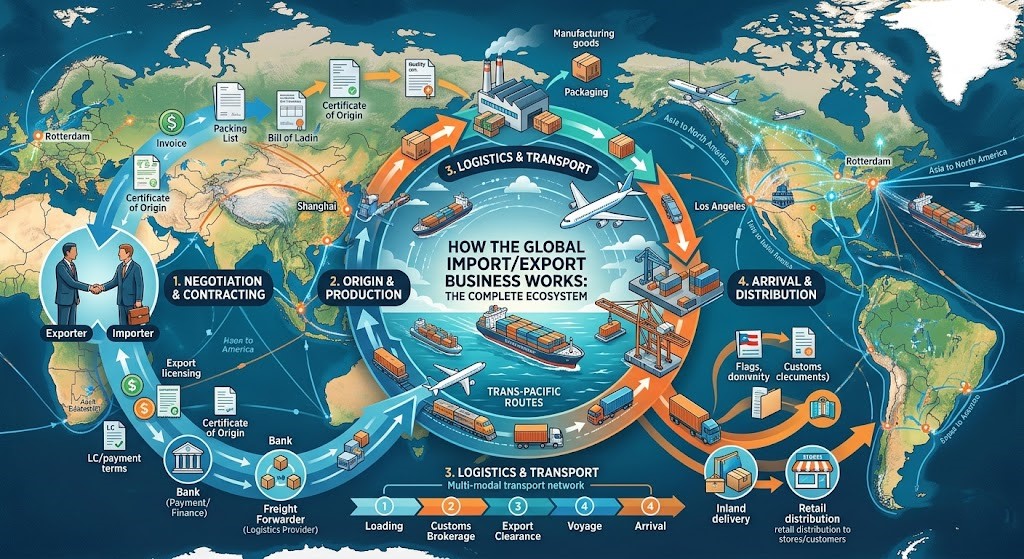
Working With a Global Sourcing Company
A global sourcing company acts like your eyes and ears in foreign markets.
These companies help businesses:
- Locate factories
- Compare prices
- Inspect quality
- Manage negotiations
- Arrange shipping
This is especially useful when dealing with overseas manufacturers you cannot visit personally.
Many companies use sourcing agents when they import from China because the supplier network is enormous and sometimes difficult to navigate alone.
Supplier Verification Process
Supplier verification protects buyers from fraud and poor-quality products.
This process usually includes:
- Checking business licenses
- Reviewing certifications
- Factory inspections
- Product sample testing
- Verifying export records
Imagine ordering 10,000 products only to discover the supplier doesn’t exist. Verification prevents disasters like that.
Professional supplier verification is essential in international trade.
Step 3 – Import From China and Other Countries
China remains one of the world’s largest manufacturing hubs.
Businesses import from China because of:
- Competitive pricing
- Massive production capacity
- Product variety
- Flexible manufacturing
However, importing requires careful planning.
Choosing a Wholesale Supplier
A reliable wholesale supplier should offer:
- Consistent quality
- Fair pricing
- Good communication
- Production reliability
- Export experience
Never choose a supplier based only on the cheapest price.
Sometimes the lowest-cost supplier becomes the most expensive mistake.
Negotiating Prices and MOQ
MOQ means Minimum Order Quantity.
Most suppliers require buyers to purchase a minimum number of units.
Negotiation strategies include:
- Ordering samples first
- Building long-term relationships
- Comparing multiple suppliers
- Negotiating packaging costs
- Discussing payment terms
Strong negotiation skills can significantly improve profit margins.
Step 4 – Understand International Shipping
Once products are ready, they must move across borders safely and efficiently.
This is where international shipping enters the picture.
Shipping affects:
- Delivery time
- Product condition
- Customer satisfaction
- Overall profitability
Air Freight vs Sea Freight
Air Freight
Pros:
- Faster delivery
- Better for urgent goods
- Lower damage risk
Cons:
- Expensive
- Weight limitations
Sea Freight
Pros:
- Cost-effective for large shipments
- Ideal for bulk cargo
Cons:
- Slower transit times
- Weather-related delays
Choosing the right shipping method depends on budget, urgency, and cargo type.
Freight Forwarding Explained
Freight forwarding companies coordinate cargo transportation.
They handle:
- Booking cargo space
- Shipping documentation
- Customs coordination
- Cargo tracking
- Delivery scheduling
Think of freight forwarding companies as travel agents for goods.
Without them, international logistics would become chaotic.
Step 5 – Customs Clearance and Documentation
This is the stage where many beginners panic.
Every country has customs regulations that imported goods must follow.
Customs clearance ensures products legally enter or leave a country.
Essential Import Export Documents
Key documents include:
- Commercial Invoice
- Packing List
- Bill of Lading
- Certificate of Origin
- Import License
- Insurance Certificate
Even one missing document can delay shipments for days or weeks.
Accuracy is everything.
Common Customs Challenges
Typical customs problems include:
- Incorrect product classification
- Under-declared value
- Missing permits
- Duty disputes
- Inspection delays
This is why experienced businesses often hire customs brokers or trade consulting experts.
Step 6 – Warehousing and Logistics Solutions
After customs clearance, goods usually move into storage facilities.
Modern logistics solutions help businesses:
- Store inventory
- Track shipments
- Manage fulfillment
- Reduce transportation costs
Efficient logistics can become a major competitive advantage.
Fast delivery often matters as much as product quality itself.
Step 7 – Selling Products Internationally
Now comes the exciting part selling.
Businesses can sell products through:
- Retail stores
- Online marketplaces
- Distributors
- Wholesalers
- B2B platforms
Scaling globally requires strategic distribution channels.
Understanding B2B Sourcing
B2B sourcing means business-to-business purchasing.
Instead of selling directly to consumers, companies supply products to:
- Retailers
- Importers
- Factories
- Construction firms
- Distributors
B2B sourcing usually involves larger order quantities and long-term contracts.
It’s one of the most profitable areas of international trade.
Entering the Saudi Arabia Wholesale Market
The Saudi Arabia wholesale market is one of the fastest-growing trade sectors in the Middle East.
High-demand sectors include:
- Electronics
- Building materials
- Fashion
- Food products
- Medical supplies
Saudi Arabia imports massive quantities of products annually, creating opportunities for exporters worldwide.
Understanding local regulations and buyer preferences is critical for success there.
Step 8 – Working With UAE Import Company Networks
The UAE import company ecosystem plays a huge role in global trade.
Cities like Dubai function as international trade hubs connecting:
- Asia
- Africa
- Europe
- Middle East markets
Many businesses use UAE companies for:
- Re-export operations
- Warehousing
- Regional distribution
- Trade financing
The UAE’s strategic location makes it ideal for global commerce.
The Role of Trade Consulting in Global Business
Trade consulting firms help businesses navigate complex international markets.
They provide:
- Market entry strategies
- Compliance guidance
- Risk management
- Supplier sourcing
- Tariff analysis
Think of trade consultants as navigators helping ships avoid dangerous waters.
Their expertise can save companies thousands of dollars.
Common Mistakes in the Export Business
Even experienced traders make mistakes.
Common errors include:
- Ignoring supplier verification
- Poor quality control
- Underestimating shipping costs
- Choosing unreliable freight partners
- Failing to understand regulations
One mistake can erase profits quickly.
That’s why planning and due diligence are essential.
Tips for Long-Term Success in Import Export
Success in the export business doesn’t happen overnight.
Here are proven strategies:
Build Strong Relationships
Reliable suppliers and buyers are gold in international trade.
Focus on Product Quality
Consistent quality creates repeat customers.
Stay Updated on Regulations
Trade laws constantly change.
Diversify Markets
Avoid relying on a single country or customer.
Invest in Technology
Digital tracking and automation improve efficiency.
Global trade rewards businesses that stay flexible and adaptable.
Conclusion
The import export business may seem overwhelming at first, but the process becomes manageable when broken into clear steps.
From finding a wholesale supplier and managing international shipping to handling customs clearance and entering global markets, every stage plays a critical role.
Businesses that succeed in international trade usually focus on three things:
- Reliable partnerships
- Smart logistics solutions
- Strong market research
Whether you plan to import from China, work with a global sourcing company, or expand into the Saudi Arabia wholesale market, the opportunities are enormous for those willing to learn the system.
Global trade is no longer reserved for giant corporations. Today, even small businesses can compete internationally with the right strategy and execution.
FAQs
1. What is the best country to import products from?
China remains one of the most popular countries because of its manufacturing capacity, competitive prices, and product variety. However, countries like Vietnam, India, and Turkey are also growing manufacturing hubs.
2. How much money is needed to start an import export business?
Startup costs vary depending on product type, shipping volume, and market. Small traders may begin with a few thousand dollars, while larger operations require significantly more capital.
3. Why is supplier verification important?
Supplier verification protects businesses from scams, poor-quality products, and unreliable manufacturers. It ensures the supplier is legitimate and capable of fulfilling orders properly.
4. What does a freight forwarding company do?
Freight forwarding companies organize cargo transportation, documentation, customs coordination, and shipment tracking for international trade.
5. What are the biggest risks in international trade?
Major risks include shipping delays, customs issues, currency fluctuations, fraud, quality problems, and changing government regulations. Proper planning helps reduce these risks.