
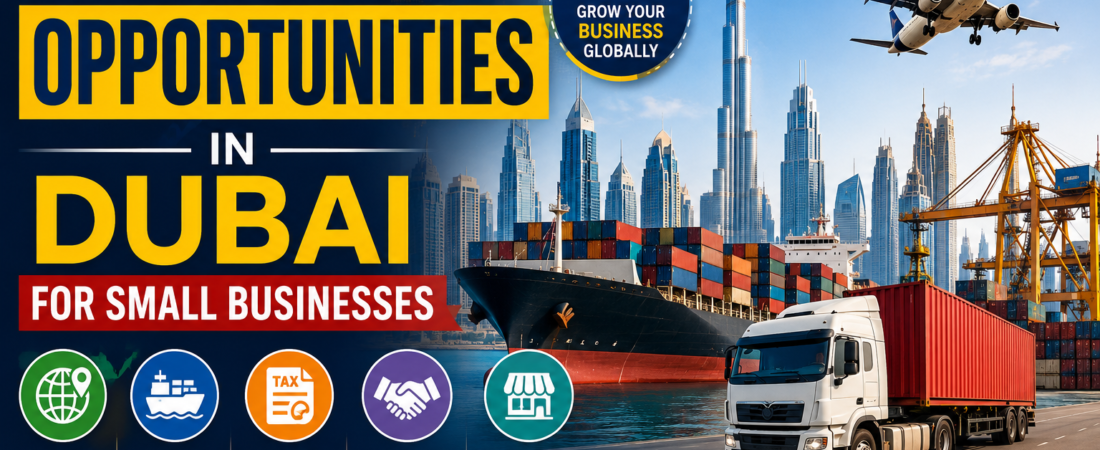
Opportunities in Dubai
Dubai has become one of the world’s most attractive trade hubs for entrepreneurs and small businesses. With its strategic location between Asia, Europe, and Africa, tax-friendly policies, modern logistics infrastructure, and growing international trade ecosystem, the city offers exceptional opportunities for companies looking to enter the import-export market.
For small businesses, Dubai is more than just a gateway to the Middle East — it is a launchpad for global expansion. Whether you want to trade food products, textiles, electronics, cosmetics, machinery, or consumer goods, Dubai provides the infrastructure and business support needed to scale quickly.
According to recent UAE trade reports, non-oil trade continues to grow rapidly, driven by logistics innovation, free zones, and government-backed trade initiatives.
Why Dubai is Ideal for Import Export Businesses
Strategic Global Location
Dubai connects major international markets within a few hours by air and sea. Businesses can easily access customers across:
- Gulf Cooperation Council (GCC) countries
- Africa
- South Asia
- Europe
- Central Asia
This geographic advantage allows small businesses to reduce shipping times and operate as regional distributors.
World-Class Logistics Infrastructure
Dubai is home to some of the world’s most advanced logistics facilities, including:
- Jebel Ali Port
- Dubai International Airport
- Al Maktoum International Airport
- Modern warehousing and free zone facilities
These logistics networks help businesses move goods efficiently while reducing operational costs.
Tax Benefits and Free Zones
Dubai offers numerous free zones that provide:
- 100% foreign ownership
- Easy business setup
- Customs advantages
- Simplified import-export procedures
- Competitive corporate tax structures
This makes it easier for startups and SMEs to establish trading operations with lower barriers to entry.
Top Import Export Opportunities in Dubai
1. Food and Beverage Trading
Food imports remain one of Dubai’s strongest business sectors due to the UAE’s dependence on imported food products. Demand is especially high for:
- Organic foods
- Frozen foods
- Spices
- Halal products
- Specialty beverages
- Packaged snacks
Dubai’s international population creates opportunities for niche ethnic food imports and exports. The government also continues supporting food-focused SMEs through major trade events like Gulfood.
2. Electronics and Mobile Accessories
Dubai is a major re-export hub for electronics across Africa and the Middle East. Small businesses can profit from importing:
- Smartphones
- Laptop accessories
- Gaming equipment
- Smart home devices
- Mobile spare parts
Many entrepreneurs use Dubai as a redistribution center for neighboring countries with rising consumer demand.
3. Fashion and Textile Exports
Fashion remains one of the fastest-growing trade sectors in Dubai. Entrepreneurs can import or export:
- Ready-made garments
- Modest fashion
- Luxury apparel
- Footwear
- Fabrics and textiles
Dubai’s retail ecosystem and international trade exhibitions make it easier to connect with wholesale buyers.
4. Cosmetics and Beauty Products
The beauty industry in the UAE continues to grow due to strong consumer spending and tourism. Popular opportunities include:
- Korean skincare
- Organic cosmetics
- Haircare products
- Perfumes
- Men’s grooming products
Small businesses can leverage Dubai’s eCommerce growth to reach customers across the GCC region.
5. Auto Parts and Machinery
Dubai has a large automotive trade market serving Africa, the Middle East, and South Asia. Demand remains high for:
- Vehicle spare parts
- Industrial machinery
- Construction equipment
- Lubricants
- Heavy vehicle components
This sector offers strong profit margins for businesses with reliable supplier networks.
Benefits for Small Businesses
Low Entry Barriers
Compared to many global trade hubs, Dubai allows entrepreneurs to start import-export operations with relatively low startup costs and flexible licensing options.
Access to International Buyers
Trade exhibitions, business networking events, and online marketplaces help SMEs connect with buyers worldwide.
Strong Government Support
Dubai’s economic strategy actively supports SME growth and exports through trade assistance programs and financing partnerships. Recent initiatives by the Dubai Department of Economy and Tourism aim to help businesses expand globally through logistics and export support.
ECommerce Expansion
Many businesses are combining import-export models with eCommerce stores, enabling them to sell directly to consumers across international markets.
Challenges Small Businesses Should Consider
Although Dubai offers tremendous opportunities, businesses should also prepare for common challenges such as:
- Customs compliance
- Shipping cost fluctuations
- Supplier verification
- Product certification requirements
- Market competition
Online discussions from SME communities in the UAE show that many first-time importers struggle with customs codes, logistics documentation, and supplier agreements during their early shipments.
Working with experienced freight forwarders and customs consultants can significantly reduce these risks.
How to Start an Import Export Business in Dubai
Step 1: Choose Your Business Activity
Decide whether you will focus on importing, exporting, or re-exporting products.
Step 2: Select a Business Jurisdiction
You can register your company in:
- Mainland Dubai
- Free zones
- Offshore structures
Free zones are especially popular for SMEs involved in international trade.
Step 3: Obtain a Trade License
Apply for an import-export or general trading license through the appropriate authority.
Step 4: Register for Customs
Businesses must obtain customs registration and trade codes to legally import or export products.
Step 5: Build Supplier and Buyer Networks
Success in import-export depends heavily on reliable partnerships, pricing strategies, and logistics planning.
Future Outlook for Dubai Trade Businesses
Dubai’s trade ecosystem continues to expand as the UAE invests heavily in logistics, manufacturing, and international trade partnerships. The city’s D33 economic agenda aims to strengthen Dubai’s position as a global business and export hub over the coming decade.
For small businesses, this creates long-term opportunities in:
- Cross-border eCommerce
- Regional distribution
- Specialized product imports
- Niche export markets
- Digital trade platforms
Final Thoughts
Dubai remains one of the best locations in the world for small businesses entering the import-export industry. Its strategic location, business-friendly regulations, advanced infrastructure, and growing international trade network make it an attractive destination for entrepreneurs seeking scalable opportunities.
Whether you are launching a food trading company, electronics business, fashion export operation, or eCommerce distribution brand, Dubai offers the tools and market access needed for sustainable growth.
For small businesses willing to research their niche, build trusted supplier relationships, and understand international trade regulations, Dubai can become a powerful gateway to global success.